The Pentagon's New AI Portal Is Mostly About Paperwork
By Toolbox Ninja · · 5 min read
The Pentagon now offers three AI model families through one secure portal, with paperwork and human review as the first serious test.
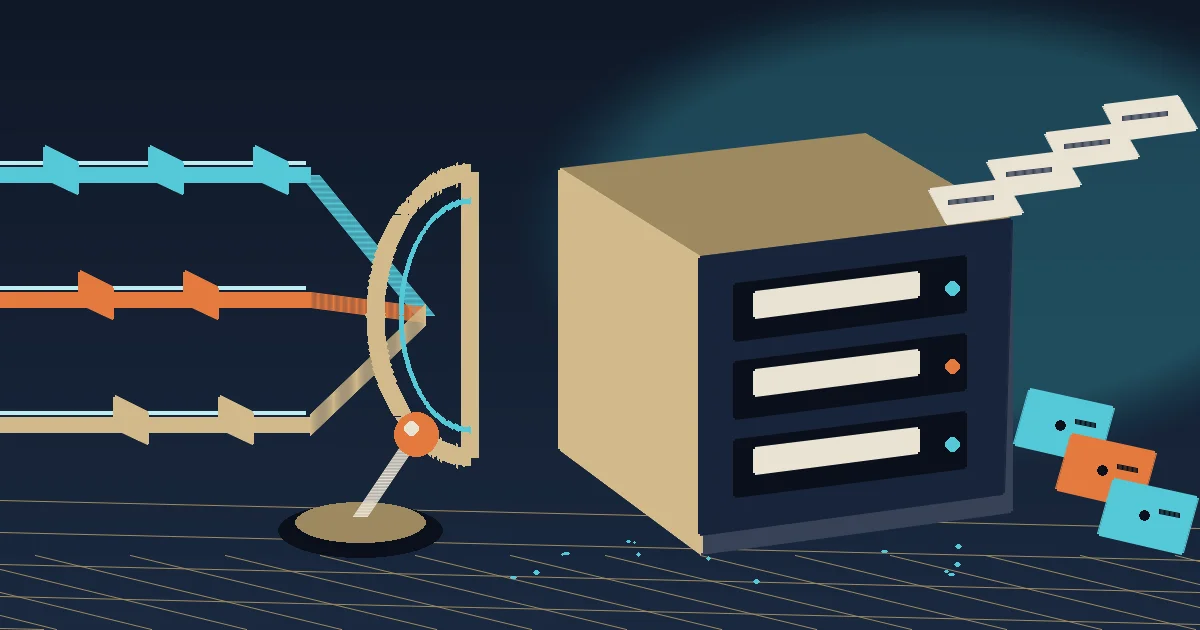
The Pentagon has added custom versions of ChatGPT and Grok to GenAI.mil, the secure portal that already offered Google's Gemini. That gives military personnel a choice of commercial AI systems inside one government environment, rather than sending work through ordinary consumer chatbots.[1][2][4]
The headline sounds like a story about battlefield automation. The release notes point somewhere less cinematic: planning documents, policy work, logistics, administration, market research and supply-chain management.[1][2] The first big test of military generative AI may happen in offices, where people spend their days searching files, drafting memos and carrying knowledge from one project to the next.
The scale changes the test. GenAI.mil has already enrolled more than 1.7 million unique users from a workforce of more than 3 million, according to the department.[2][4] Small changes to routine work can spread quickly across that many desks. So can bad habits.
One portal, several models
ChatGPT Mil and Grok for Government are not links to the public versions of those products. Both have been accredited at Impact Level 5 for Controlled Unclassified Information, and the department describes them as services engineered for secure enterprise use.[1][2] DefenseScoop reports that Gemini, ChatGPT and Grok have all cleared IL5, which covers sensitive but unclassified material.[3]
A public chatbot is the wrong place for an internal planning document, a procurement draft or a logistics file. GenAI.mil puts approved models behind a common door where the department can control access and data handling.[4]
It also gives users a model menu. That may sound like a minor interface choice, but it changes how an organization buys and uses AI. Instead of declaring one model the permanent winner, the Pentagon can route different jobs to different systems and replace a provider without rebuilding the entire front end. A department official told DefenseScoop that the architecture is intended to prevent vendor lock-in and preserve flexibility.[3]
More choice also means more evaluation. If two models produce different summaries of the same policy, the user still has to decide which one is faithful. A secure connection does not make an answer correct. The portal solves one part of the deployment problem, not the whole problem.
The products are aimed at different kinds of routine
The department's description of ChatGPT Mil is fairly concrete. Its initial tools cover chat, files, projects and custom GPTs. The stated use cases are document-heavy, unclassified tasks in planning, policy, logistics and administration.[1] In other words, it is pitched as a workbench for recurring office jobs, not an autonomous commander.
Grok for Government is described in broader terms. The service includes several reasoning modes, persistent projects, customizable workspaces and reusable "playbooks" designed to preserve institutional knowledge.[2] The department names acquisition research and logistics supply-chain management as examples.[2]
Those playbooks may be the more interesting feature. Large organizations lose time when a process lives in one employee's memory or in a folder that nobody else can find. A reusable workflow can make that process easier to repeat. It can also preserve a mistake just as efficiently. Somebody has to own each playbook, review its sources and retire it when the underlying rules change.
DefenseScoop says ChatGPT Mil currently offers GPT-5.4 Terra, with GPT-5.6 Terra expected later. The same report describes an offline search feature with citations that can be refreshed as information changes.[3] Those details suggest the portal will not remain static. Models, search indexes and features will move on separate schedules, which makes version tracking part of the job.
Security is only the first gate
IL5 accreditation answers an important question: where may sensitive unclassified data be processed? It does not answer whether a model understood a memo, used the latest instruction or invented a plausible citation.
The practical controls therefore need to sit around the model. Staff should know which tasks are allowed, which records may be uploaded, when a human must approve the result and how to reconstruct what happened later. A useful audit trail would identify the model version, attached files, prompt, output and final human decision. Without that trail, a multi-model portal can become a very polished source of ambiguity.
The department says ChatGPT Mil is built to serve more than 3 million personnel.[1] Scale makes interface design matter. A warning hidden in a policy manual will not help much if the product itself encourages users to accept a fluent answer and move on. Citations should open cleanly. Generated text should remain visibly generated until reviewed. High-impact workflows should require an accountable person to sign off.
The model can draft the text. The slower work is deciding who checks it, which source outranks another and what happens when the output is wrong.
What to watch next
The launch creates a live comparison among three major model families inside one enormous organization. The useful evidence will not be a leaderboard or a polished demo. It will be operational data: which tasks people actually use, how often outputs are corrected, whether cited sources hold up, and whether reusable workflows save time without hiding errors.
The absence of Claude is also notable. DefenseScoop reports that a dispute over contractual limits derailed plans to add Anthropic's model, leaving Gemini, ChatGPT and Grok in the portal for now.[3] That history shows that a "multi-model" strategy still depends on contracts, policy choices and the willingness of vendors to accept the government's terms.
For everyone outside the Pentagon, GenAI.mil is a useful preview of where enterprise AI is heading. The model is becoming one component inside a managed workspace, alongside identity controls, files, search, reusable workflows and audit records. The chatbot window is the visible piece. The machinery around it decides whether the system is useful.
For now, paperwork is the test. That may sound dull next to battlefield AI, but these are the jobs that can quietly turn a chatbot into everyday infrastructure. Whether the system works will depend on whether people can see, check and own what it produces.
Sources
[1] https://www.war.gov/News/Releases/Release/Article/4586352/department-of-war-launches-openais-chatgpt-mil-on-genaimil — Department of War Launches OpenAI's ChatGPT Mil on GenAI.mil [2] https://www.war.gov/News/Releases/Release/Article/4586482/department-of-war-launches-starshield-ais-grok-for-government-on-genaimil — Department of War Launches Starshield AI's Grok for Government on GenAI.mil [3] https://defensescoop.com/2026/08/31/grok-chatgpt-added-to-genai-mil — Grok and ChatGPT join Gemini in Pentagon's enterprise genAI portal [4] https://techcrunch.com/2026/08/31/the-pentagon-now-has-its-own-version-of-chatgpt-and-grok — The Pentagon now has its own version of ChatGPT and Grok